Traffic counts arrivals. Engagement measures attention. See how long visitors were present, how long they actively engaged, and how often they returned.
In short
What do engagement metrics tell you?
Traffic tells you which pages attracted visitors. Engagement duration and active days help you understand whether they stayed and returned.
A tab left open in the background is different from an actively used page. mrkr keeps wall-clock duration, visible time and engaged time separate.
Compared
Know what each number measures.
| Metric | Definition in mrkr | Scope |
|---|---|---|
| Visible time | Time while the page is in a visible browser tab | Page instance |
| Engaged time | Visible time with an interaction in the last 30 seconds | Page instance |
| Stickiness | Distinct calendar days a visitor was active | Visitors in the selected range |
| Returning share | Visitors active on more than one day | Visitors in the selected range |
| Bounce rate | Sessions with one pageview | Sessions in the selected range |
Cookieless identity rotates daily. Use cookie mode when you need to follow the same visitor across days.
Give engagement context.
Compare pages with similar jobs
An article and a checkout have different goals. More time can mean attention on one and friction on the other.
Connect visits to outcomes
Use events and revenue to see whether an engaged visit led to a meaningful action.
Understand returning visitors
Active-day distributions show whether people use the site once or return throughout the range.
Separate hidden and idle time
Foreground and engaged duration avoid treating an abandoned background tab as active attention.
Live demo
Open the engagement view. Explore active days and returning share in the populated demo. No signup required.
Open the live demo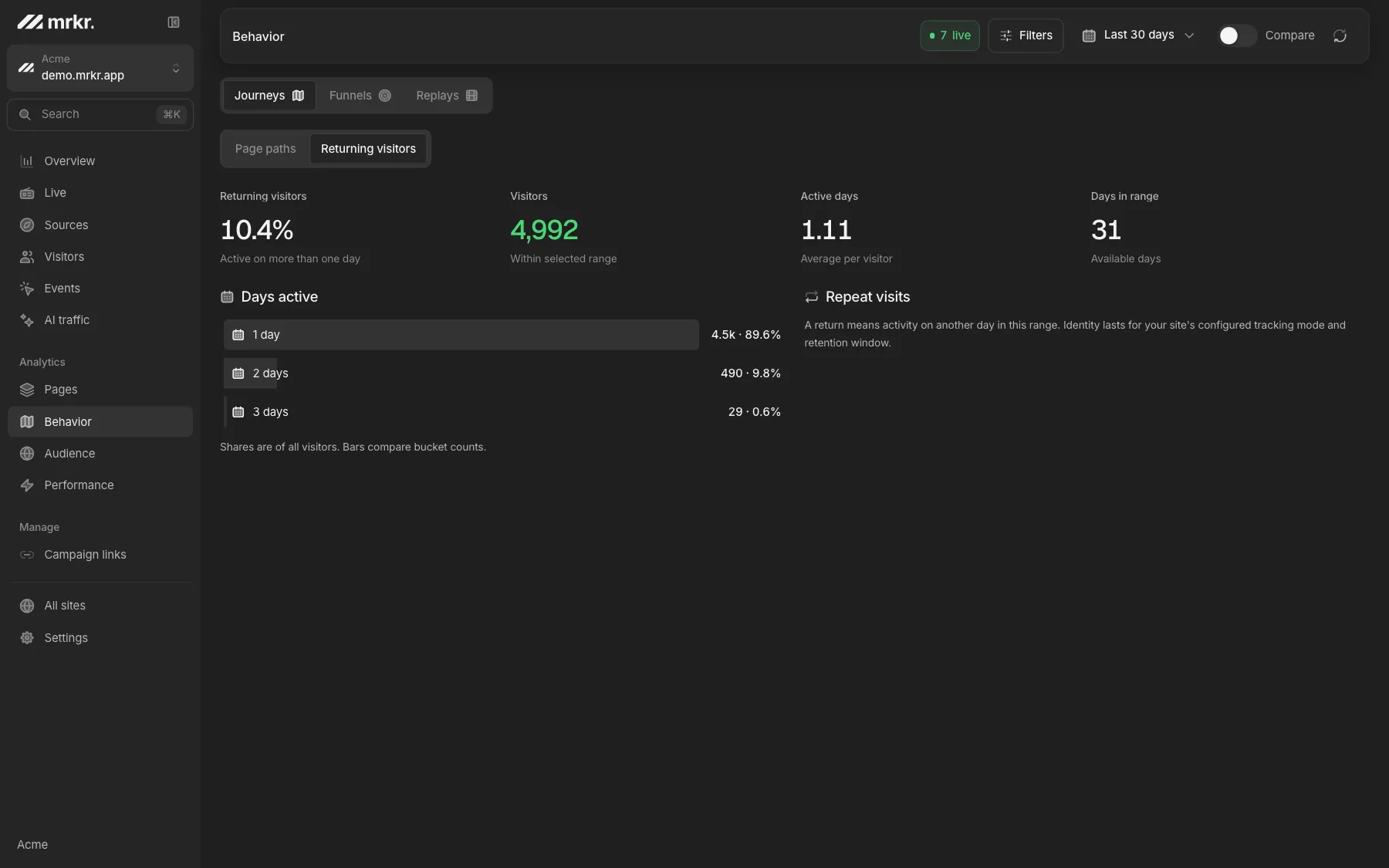
FAQ
What are engagement metrics?
Measurements of involvement rather than arrival. mrkr records foreground and engaged time per page and counts the distinct days each visitor was active within a range.
How does mrkr measure engaged time?
Time accumulates while the tab is visible and the visitor has interacted within the last 30 seconds. Hidden or idle tabs stop accumulating. Cumulative readings are reported when a page is hidden or left, with duplicate readings handled safely by the server.
What is stickiness?
The number of distinct calendar days each visitor was active within the range. Retention asks whether someone came back; stickiness asks how often. Cross-day analysis requires cookie mode because the cookieless identifier rotates daily.
Do engagement reports count towards my quota?
No. Only pageviews consume quota. Engagement time, custom events, revenue and session recordings are included without adding billable pageviews.
Start with one line of HTML.Your first visitors show up within a minute.